

Stereolithography (SLA) 3D Printing Guide
Feb 13, 2025
Leave a message
Among the many resin 3D printing processes, Stereolithography (SLA) 3D printing technology has become the most common and popular one due to its excellent performance. It can produce high-precision, isotropic, watertight prototypes and finished parts to meet diverse production needs.
The parts produced by SLA 3D printers not only have a series of advanced material properties that can adapt to the use requirements of different scenarios; its excellent surface finish makes the product texture delicate and exquisite; and its fine feature display can accurately restore the design details and realize the construction of complex structures. In this detailed guide, you will have a deep understanding of the operating mechanism of SLA resin 3D printers, explore why it is widely used by thousands of professionals today, and know how SLA printers can be integrated into your workflow to bring significant benefits to your work.

Table of contents
1.1 How SLA 3D Technology Works
2. A Brief History of Stereolithography
3. Desktop SLA 3D Printers Disrupt the Market
4. SLA 3D Printing Workflow
4.1Design stage
4.2Printing stage
4.3Post-processing stage
5. Why Choose SLA 3D Printing?
5.1Speed and Output
5.2Material Versatility
5.3Accuracy and Precision
5.4Fine features and smooth surface finish
6. Applications of SLA 3D Printing Technology
7. SLA 3D Printing Materials
1. What is SLA 3D Printing?

Stereolithography (also known as vat photopolymerization or resin 3D printing) is an additive manufacturing process that uses a light source to cure liquid resin into hardened plastic. SLA 3D printing is the fastest, with the highest resolution and accuracy, the sharpest details, and the smoothest surface finish in the entire 3D printing technology field. In addition, resin 3D printing technology has another outstanding advantage - material diversity. Material manufacturers have developed innovative SLA resin formulations that have a wide range of optical, mechanical and thermal properties that can be fully matched with standard, engineering and industrial thermoplastics.
With the continuous advancement of 3D printing hardware, software and material science, SLA technology has become more affordable and accessible, allowing companies to transform their prototyping, testing and production models. SLA 3D printed parts have been widely used in various industries, such as manufacturing finished products, industrial replacement parts, manufacturing aids, tools, etc. Its smooth surface finish and tight tolerances make it an ideal choice for multi-piece assemblies, consumer products or final design review parts.

Now that affordable and easy-to-use workflows are available, businesses of all sizes have the opportunity to bring high-quality 3D printing in-house. The application of this technology has helped thousands of professionals reduce operating costs, increase efficiency, and create entirely new business models.
1.1 How SLA 3D Technology Works
The working principle of SLA 3D printing technology is based on the use of light to solidify liquid resin into a three-dimensional object. The specific method is to expose the resin barrel or resin tank to the light source to harden the liquid resin. In traditional top-down SLA 3D printers, the light source is located above the liquid resin barrel, and the light irradiates the liquid resin from top to bottom. In 2011, the inverted stereolithography technology launched by Formlabs co-founders Max Lobovsky, David Cranor and Natan Linder overturned the traditional layout and placed the light source below the resin tank. When working, the cross section of the part is first drawn on the bottom resin layer. As the build platform rises, the liquid resin will naturally flow under the solidified layer to complete the backfilling of the resin layer. Repeating this process can print complex three-dimensional objects.

There are many innovations in inverted stereolithography technology, among which the design of the transparent (eventually flexible) bottom resin tank is of great significance. This design not only makes it possible to manufacture larger inverted SLA 3D printers, but its flexible surface can also effectively reduce the peeling force and improve printing stability and efficiency.
SLA 3D printers use photosensitive thermosetting materials - resins. When SLA resins are exposed to light of a specific wavelength, the internal short molecular chains quickly connect, and the monomers and oligomers polymerize into rigid or flexible geometric shapes to achieve solidification.
In the past decade, new resin 3D printing processes have emerged, mainly based on the type of light source used. Common processes include: laser-driven stereolithography (SLA), which uses the high energy density of lasers to accurately cure resins; digital light processing (DLP), which uses digital micromirror devices to quickly switch light patterns to cure resins; mask stereolithography (MSLA, often used interchangeably with LCD 3D printing), which uses an LCD screen as a mask to control the area where light is irradiated. For example, Formlabs' Low Force Display™ (LFD) print engine is an advanced form of MSLA 3D printing.

The SLA 3D printing workflow is simple. After printing, the parts should be cleaned with alcohol or ether to remove excess liquid resin on the surface. Afterwards, depending on the material, a post-curing step may be required to complete the polymerization of the part and achieve its optimal material properties. Further post-treatments such as coloring, coating or electroplating may be performed to meet specific application or aesthetic requirements.
2. A Brief History of Stereolithography
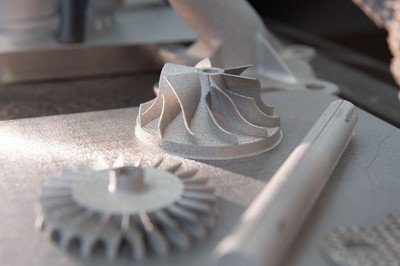
Stereolithography dates back to the early 1980s, when Japanese researcher Dr. Hideo Kodama pioneered the modern layering method of curing photopolymers with UV light, which became the prototype of stereolithography. Charles (Chuck) W. Hull then coined the term "stereolithography" and successfully obtained a patent for the technology in 1986. In the same year, he founded 3D Systems and officially commercialized stereolithography, opening a new chapter in its application in the industrial field. Hull described the technology as creating 3D objects by continuously "printing" thin layers of materials that can be cured by UV light.
Although stereolithography was born early, it was not the first 3D printing technology to gain widespread popularity. In the late 2000s, as related patents expired, small-format fused deposition modeling (FDM) 3D printers appeared on the market. Once this affordable extrusion technology was launched, it triggered the first wave of widespread application and recognition of 3D printing technology, greatly expanding the application scope of additive manufacturing. However, FDM 3D printers have certain limitations in meeting various professional needs and cannot fully cover all application scenarios. This also prompted the continuous innovation of stereolithography technology in subsequent development to adapt to more diverse needs.
3. Desktop SLA 3D Printers Disrupt the Market
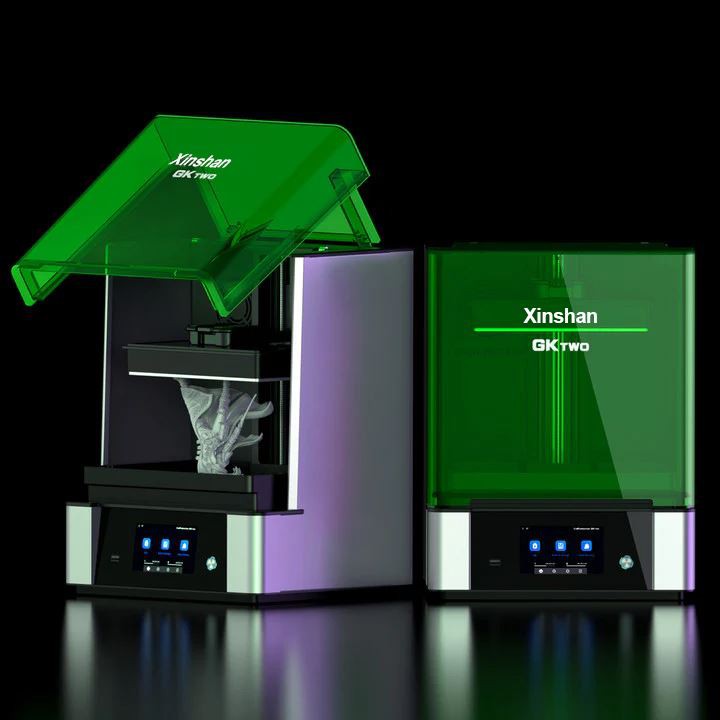
In the development of 3D printing technology, Desktop SLA 3D Printer have brought about market changes. Previously, high-resolution 3D printing relied on large industrial systems, which were costly and occupied a large area. Desktop SLA printers broke this situation with their compact body and affordable price, making high-resolution 3D printing popular.
The first inverted stereolithography solution is of great significance. It enables different customers to access SLA 3D printing technology, and its prototype lays the foundation for subsequent technological development. In 2015, the number of compatible materials increased, helping innovation in multiple industries such as product design, engineering manufacturing, dentistry, and jewelry. In 2019, the flexible bottom resin tank was used to reduce peeling force, improve printing quality and expand the scope of application. Today, stereolithography technology has become one of the mature plastic 3D printing processes with strong competitiveness.
4.SLA 3D printing workflow
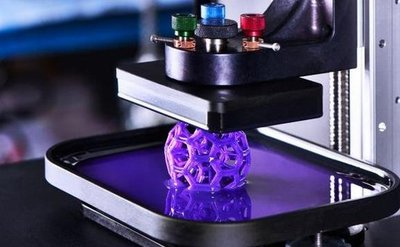
4.1Design phase

Use CAD software or 3D scan data to design a 3D model and export it to STL or OBJ format. Import the print preparation software, set parameters and slice it, such as PreForm software, which can automatically generate supports and determine the printing direction. Advanced users can also hollow out parts for SLA technology to save materials.
4.2Printing phase

After the design and parameter setting are completed, the print preparation software transmits data to the printer via the network, USB or Ethernet. The removable resin tank and platform of the inverted SLA printer are convenient for changing materials and new printing.
4.3Post-processing phase
Most SLA printers need to manually scrape off the parts, but the Build Platform Flex and Flex L can quickly remove the parts to reduce damage. After removal, clean them with isopropyl alcohol or ether, and use the Form Wash device to simplify the process. Some materials need to be post-cured after washing and drying. Form Cure can accurately control temperature and light to ensure the curing effect. Finally, the supports and grinding marks are removed, and the SLA parts can also be processed, painted, or further processed by grinding, electroplating, etc. to meet different application requirements.
5. Why Choose SLA 3D Printing?
5.1 Speed and Output
In 3D printing technology, SLA 3D printing is the fastest, and laser-driven SLA curing is slower than DLP or MSLA. Supports Fast Model Resin, with a speed of 100 mm/hour, and can be printed in two hours, with multiple iterations per day. It can achieve human-sized design and manufacturing, with most builds completed within six hours, and large or batch production can be completed within one day.

5.2 Material Versatility
SLA 3D printing materials are rich, with hundreds of resin formulas, which can be filled with auxiliary materials, taking into account different mechanical properties and hardness, covering materials in multiple industries. Printer manufacturers have self-prepared, open platform or white label modes. Although different from traditional thermoplastics, there are SLA resins suitable for almost every application.

5.3 Accuracy and Precision
Precision and accuracy are critical to various industries, and SLA printing is one of the high-precision 3D printing solutions. Accuracy refers to the degree of matching with the CAD model size, and precision is the degree of repeated production of the same size. The accuracy of professional-grade SLA 3D printers is between standard and fine processing, and is affected by the light source, component quality, engineering design calibration and materials. Rigid materials are more accurate. , can print with high precision, its heated closed environment and low-temperature printing reduce the impact of thermal expansion and contraction, and the LFD printing engine and low peeling force ensure the accuracy of the parts.
5.4 Fine features and smooth surface finish
SLA 3D printers are the benchmark for manufacturing smooth surfaces and fine features. The surface of the printed parts is smooth, with almost no layer lines, and does not require much post-processing. The appearance is comparable to traditional manufacturing. Compared with FDM and SLS, SLA can achieve finer features and smaller sizes, more precise light control, and can print small features and thin walls.
6. Applications of SLA 3D Printing Technology
Resin 3D printed parts accelerate innovation and support businesses in various industries with advanced materials, high precision and convenient processes. Reduced costs make it more economical and easy to expand, and end-use applications and mass customization are becoming more common.
1. Manufacturing

Compared with traditional manufacturing, manufacturers use 3D printing to make prototype tools, custom tools, molds and manufacturing aids to reduce costs and turnaround time, optimize production processes, and improve quality and efficiency. Covering manufacturing aids (jigs and fixtures), rapid mold making (injection, hot pressing, silicone, blow molding), metal casting, small batch and large-scale customized production.
2. Automotive
The automotive industry uses SLA 3D printing technology to manufacture various parts throughout the entire process, from concept models to after-sales parts, involving rapid prototyping (concept models, functional prototype manufacturing, verification testing), rapid mold making, manufacturing aids, and finished, after-sales and customized parts.
3. Aerospace

SLA 3D printed parts are used for space testing, commercial aviation manufacturing and testing, prototyping and manufacturing in the aerospace industry. Applied to rapid prototyping (wind tunnel testing), rapid mold making, manufacturing aids, and finished, replacement, and customized parts.
4. Dentistry

Digital dentistry uses 3D printing to reduce risks and provide high-precision customized products and instruments, including crown and bridge models, clear aligners and Holley retainer models, surgical guides, splints and bite pads, models for casting and pressing, and dentures.
5. Medical

Professional desktop 3D printing technology helps doctors provide customized treatment plans and equipment, saving time and cost, and is applied to anatomical models, medical devices and surgical instruments, orthotics, and restorations for surgical planning.
6. Jewelry
The jewelry industry uses CAD and 3D printing for rapid prototyping to meet customer needs and produce finished products that can be cast directly, which are applied to lost wax casting (investment casting), customized high-fidelity prototypes, and master molds for rubber molding.
7. SLA 3D Printing Materials
Engineering Resins

In the field of engineering and manufacturing, material performance is related to product quality and production efficiency. As a highly glass-filled material, Xinshan Resin can remain stable and not deform when subjected to huge loads. It is an ideal choice for applications with high rigidity requirements such as injection molding, providing guarantee for the manufacture of high-precision and high-strength industrial parts. Xinshan Engineering Resins are formulated for complex needs and outperform common materials such as ABS, silicone, and PEEK. The product line is rich, including high-hardness rigid materials, impact-resistant solid materials, bending-resistant flexible materials, special functional resins such as anti-static and flame-retardant, as well as cutting-edge technology materials such as ceramic and silicone 3D printing, expanding the boundaries of desktop 3D printing, helping new applications, simplifying processes and field testing.
Dental Resins

Xinshan Dental Resins have revolutionized the dental field, and can quickly manufacture biocompatible devices such as transparent aligners and surgical guides, and can also provide high-quality solutions for advanced intraoral applications such as full dentures. Xinshan creates a streamlined and integrated workflow for dental professionals, and each link is carefully designed to ensure the production of precise parts without tedious adjustments and calibrations.
Jewelry resins

In the jewelry industry, customization and refinement are key, and jewelry resins are key materials for custom jewelry prototyping and production. New Mountain Jewelry resins restore details well, and can reproduce clear inlays, sharp claw inlays, etc. Merchants of all sizes can use it to produce trial pieces, cast custom jewelry or reusable mold masters for customers to meet personalized needs, reduce costs, and promote innovation in the jewelry industry.
With its unique advantages, SLA 3D printing technology has taken root in many industries and has greatly promoted innovation and production changes. Looking to the future, with the continuous progress of hardware, software and material science, the accuracy, speed and material diversity of SLA 3D printing are expected to be further improved, and the cost will continue to decrease. This technology will also expand its application in more emerging fields and create more possibilities. I believe that in the near future, SLA 3D printing technology will promote social development like today's traditional manufacturing technology and help various industries reach new heights.