

5-axis Machining Guide
Feb 25, 2025
Leave a message
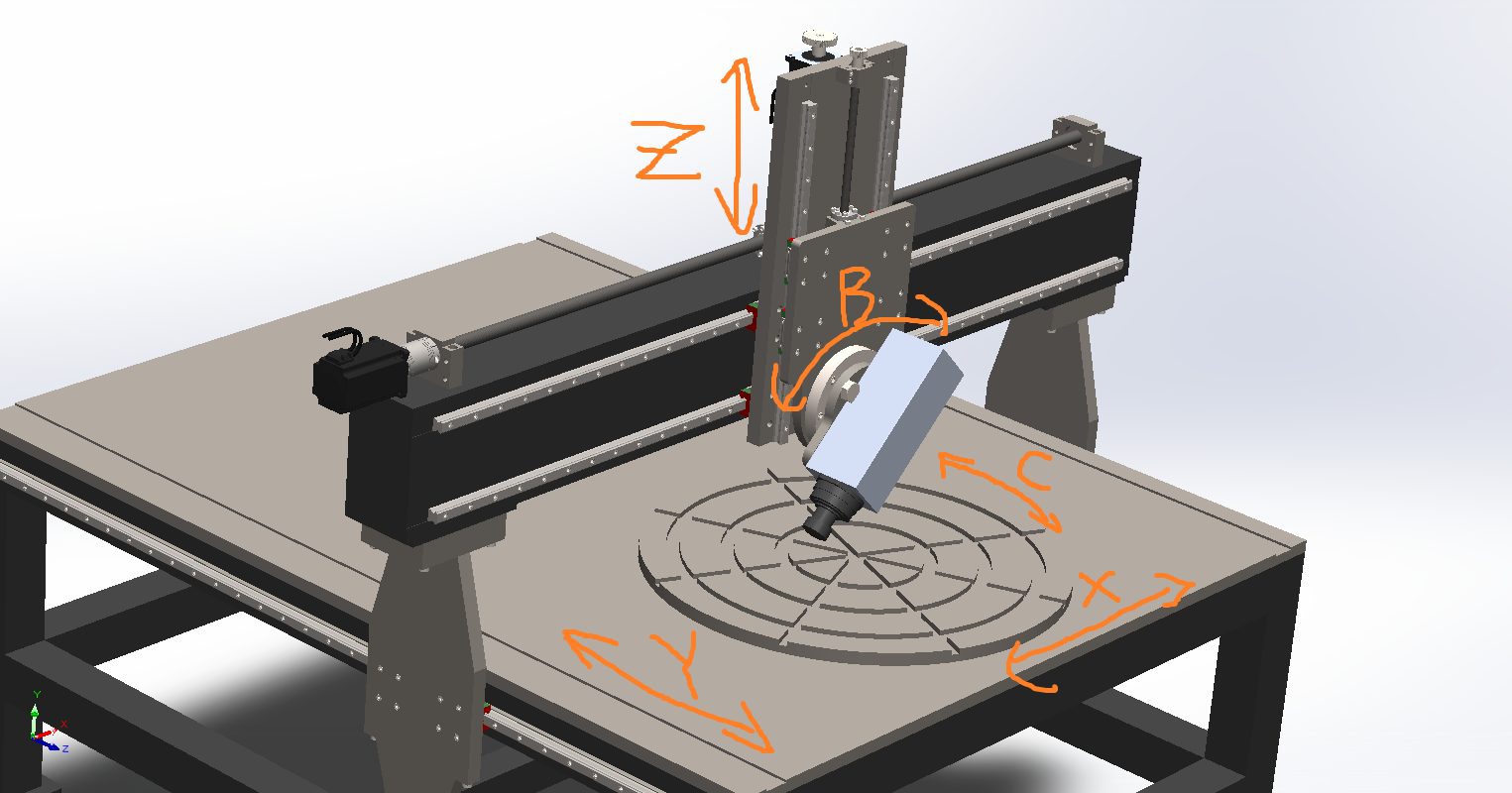
The machining industry is growing rapidly, with increasing demands for speed, capacity, accuracy, and a surge in demand for complex parts. 5-axis technology has emerged to enable tools to move around 5 axes of an object simultaneously, combining the typical X, Y, and Z axes with the A and B axes to enable tools to reach five sides of a part without additional rotation or setup. Using 5-axis machines can reduce setups, cycle times, scrap rates, increase spindle uptime, and reduce the need for trained personnel.
Table of contents
1.History of 5-axis
2.Eliminate 5-axis investment concerns
3.3+2 VS SIMULTANEOUS 5-AXIS
4.WOULD YOUR BUSINESS BENEFIT FROM 5-AXIS?
5.GETTING THE MOST OUT OF 5-AXIS
6.OUR 5-AXIS MACHINES
1.History of 5-axis
Five-axis linkage technology originated in the aerospace field in the 1960s. Because traditional three-axis machine tools cannot meet the needs of complex surface processing, it realizes the spatial linkage between tools and workpieces by adding two rotating axes, opening the era of "multi-dimensional control". In international competition, Germany has laid the foundation for high-rigidity processing with the modular design of arc-guide three-axis milling heads, Japan has improved processing efficiency with the "Done-in-One" concept, and the United States has relied on ceramic bearing spindle technology to assist military manufacturing. Europe, the United States and Japan are in a technological monopoly position.
Before 2000, my country was dependent on imports due to technological blockades. Later, through technical breakthroughs by companies such as Kede CNC, the policy promotion of "Made in China 2025" and application breakthroughs such as Beijing Jingdiao, the localization rate has been greatly improved. Today, five-axis technology is developing in the direction of "machine tool + AI" intelligence and compounding. For example, Shanghai Tuopu, Evermi, Kede and other companies have made frequent innovative achievements. Five-axis machine tools are reshaping the global high-end equipment industry pattern and witnessing the rise of China's high-end manufacturing.
2.Eliminate 5-axis investment concerns
In the machining industry, you may already be familiar with the operating principles of 3+2 axes and synchronous 5 axes, and have weighed the pros and cons of both. But there are still doubts in your mind: "Can my shop get involved in 5-axis machining? Is it really necessary to purchase 5-axis equipment?" We understand your hesitation. 5-axis equipment has always been regarded as a symbol of complexity and cost, such as positioning deviation, personnel and software training difficulties, which are daunting. Fortunately, today's 5-axis equipment is no longer what it used to be. After innovation, the performance far exceeds that of products 5 to 10 years ago.
The following is an analysis of common misunderstandings about 5-axis equipment for you:
Misunderstanding 1: 5-axis equipment is difficult to operate
This is not the case. Xinshan 5-axis equipment is self-developed, the interface fits the user's habits, is simple and intuitive, and easy to operate. The system is based on mainstream operating systems, uses standard G code format, and is equipped with menu-driven cycles, and the operation process is smooth. You can also customize functions on demand through a dedicated application platform to meet diverse processing needs.
Misconception 2: 5-axis equipment is expensive
At first glance, the price difference between standard vertical machining centers and 5-axis equipment is significant. However, if you analyze it in depth, if a vertical machine tool wants to achieve 5-axis or even 3+2-axis functions, you need to purchase special software and parts, which not only requires a large initial investment, but also reduces processing efficiency and cannot enjoy the unique advantages of 5-axis equipment (such as 5-axis automatic calibration, precise posture control, etc.). On the contrary, after introducing 5-axis equipment, the store will reap returns far exceeding the cost in terms of production efficiency and processing accuracy.
Misconception 3: Existing software is incompatible with 5-axis equipment
In fact, it is much easier than you think to fill the gap between the existing system and 5-axis equipment. If you have adopted [list mainstream processing software, such as Mastercam, SolidCAM, PowerMILL, etc.], these software can be seamlessly connected and directly converted with the 5-axis equipment code language, easily breaking the software adaptation barrier.
Misconception 4: Lack of professionals to operate 5-axis equipment
In Xinshan, buying equipment is just the beginning of service. We have prepared a wealth of resources for you, including 5-axis on-site practical training, online CNC boutique courses, and off-site training opportunities. With the support of educational partners, distributors, and professional after-sales teams, we can help you quickly master the operation of the equipment and fully tap the potential of the equipment.
Myth 5: It is difficult to find skilled workers for 5-axis processing
Nowadays, the operation of 5-axis equipment no longer relies on professional and experienced people, and ordinary employees can also easily get started! The dynamic fixture offset technology of xinshan 5-axis equipment eliminates the tedious process of precise centering of parts, giving every employee the opportunity to demonstrate their ability in 5-axis processing. The equipment is close to the efficient concept of "one-time completion", which greatly shortens the processing time and reduces the probability of human error.
Myth 6: The positioning accuracy of 5-axis equipment cannot be guaranteed
The current 5-axis equipment has achieved a breakthrough in precision control. Taking xinshan equipment as an example, it can be calibrated quickly and accurately, and effectively compensate for geometric errors, including volumetric accuracy errors. The entire calibration process only takes a few minutes, and the processing accuracy can be ensured without the in-depth participation of professional technicians.
3. 3+2 Vs Simultaneous 5 - Axis
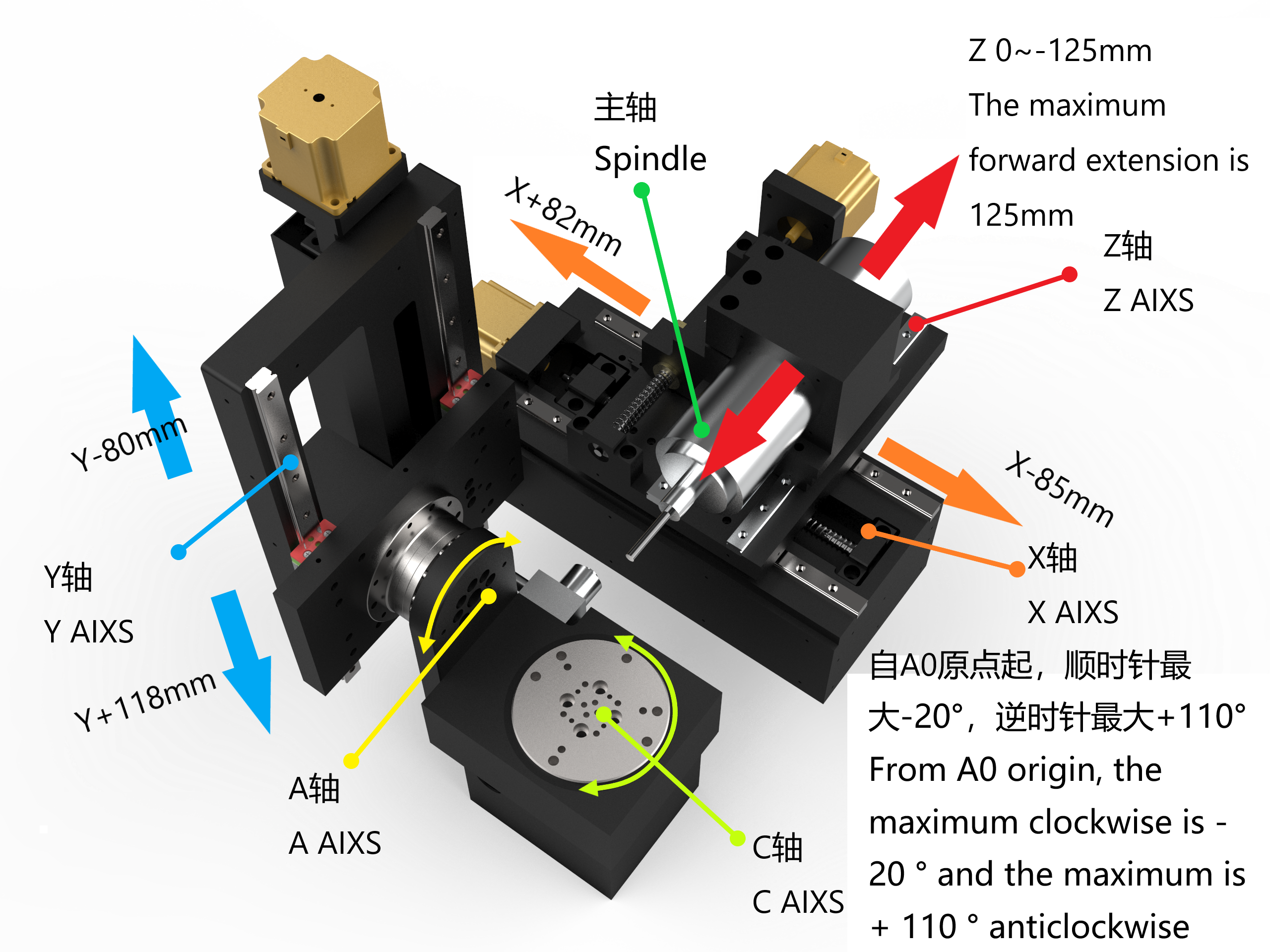
3+2 axis machining, also known as positionally - indexed 5 - axis machining, combines three linear axes (X, Y, Z) with two additional rotary axes. However, in 3+2 machining, the rotary axes are used mainly for positioning the workpiece at specific angles. Once the angles are set, the machining process is carried out with the linear axes in a more traditional 3 - axis - like manner. This approach is suitable for parts where complex angled features need to be machined but don't require continuous, smooth movement of all axes simultaneously.
On the contrary, simultaneous 5 - axis machining allows all five axes (X, Y, Z, and two rotary axes) to move in harmony during the machining process. This enables the creation of highly complex geometries, such as intricate free - form surfaces found in aerospace impellers or medical implant components. Simultaneous 5 - axis machining reduces the number of set - ups, leading to higher precision as there are fewer opportunities for errors introduced during re - positioning. It also offers faster machining times for complex parts compared to 3+2 machining, as the tool can always approach the workpiece at the optimal angle, minimizing tool wear and maximizing material removal rates.
4. Would Your Business Benefit From 5 - Axis?
If your business is involved in manufacturing complex parts, the adoption of 5 - axis machining can bring about significant benefits. In the aerospace industry, 5 - axis machines can produce turbine blades with high precision, reducing the need for costly post - machining operations. This not only saves time but also improves the overall quality of the parts, leading to enhanced performance of aircraft engines.
For the medical device manufacturing sector, 5 - axis machining allows for the creation of custom - designed implants that fit perfectly into the human body. The ability to produce intricate shapes with tight tolerances ensures better patient outcomes.
In the automotive industry, 5 - axis machining can be used to manufacture high - performance engine components. By reducing the number of parts through complex machining, the weight of the vehicle can be optimized, improving fuel efficiency. Overall, if your business aims to increase productivity, improve product quality, and gain a competitive edge in the market, 5 - axis machining is a technology worth considering.
5. Getting The Most Out Of 5 - Axis

To maximize the potential of 5 - axis machining, proper programming is crucial. Advanced CAM (Computer - Aided Manufacturing) software should be used to generate toolpaths that take full advantage of the machine's capabilities. This includes programming the optimal angles for the rotary axes to minimize tool interference and ensure efficient material removal.
Tool selection is another key factor. High - quality, specialized tools designed for 5 - axis machining are essential. These tools are engineered to withstand the forces and complex motions involved in 5 - axis operations.
Operator training is equally important. Skilled operators who understand the nuances of 5 - axis machining can fine - tune the process, make real - time adjustments, and ensure the machine runs smoothly. Additionally, regular maintenance of the 5 - axis machine, including calibration of the axes and inspection of the spindle, is necessary to keep the machine in top - performing condition and achieve the highest level of precision.
6. Our 5 - Axis Machines

Xinshan 5-axis machines are designed with the latest technology to meet the most demanding manufacturing requirements. Equipped with high-torque spindles, they can handle a wide range of materials from aluminum to hardened steel. Advanced control systems ensure precise movement of all axes, enabling the production of parts with micron-level accuracy.
Our machines are modular in design and can be easily upgraded and customized to specific production needs. Whether adding additional sensors for process monitoring or integrating a dedicated tool changer, our 5-axis machines can be customized to your manufacturing workflow. With a user-friendly interface, operators can quickly program and execute complex machining operations. With the support of our dedicated after-sales service team, you can have confidence in the performance and reliability of our 5-axis machines in all your manufacturing projects.