

The Role Of Desktop Injection Molding Machines In Modern Manufacturing
May 24, 2025
Leave a message
In the dynamic landscape of modern manufacturing, desktop injection molding machines have emerged as a transformative force. These compact yet powerful devices are reshaping traditional production processes, offering solutions that bridge the gap between rapid prototyping and small - batch manufacturing. This article delves into the multifaceted role of desktop injection molding machines, exploring their technical capabilities, applications, and impact on various industries.
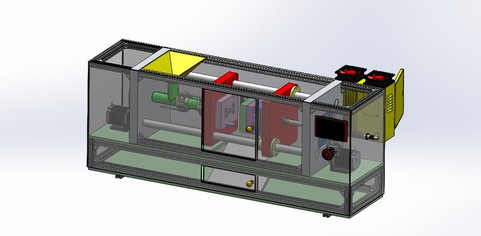
Rapid Prototyping
Desktop injection molding machines streamline the prototyping process. Traditional prototyping methods often involve time - consuming manual labor or expensive machining processes. In contrast, desktop injection molding allows designers to quickly translate digital 3D models into physical prototypes.
These machines achieve high - precision molding, with positioning accuracy typically within ±0.03mm - ±0.05mm. This precision ensures that prototypes closely match the intended design specifications, enabling accurate functional and aesthetic evaluations. For example, in the development of consumer products like mobile phone cases, desktop injection molding can produce prototypes in a matter of hours, compared to days or weeks with traditional methods.
The iterative nature of desktop injection molding also accelerates the product development cycle. Designers can make adjustments to 3D models based on prototype testing results and produce updated versions rapidly, reducing the overall time to market for new products.
Small - Batch Production

For small - batch manufacturing, desktop injection molding machines offer a cost - effective alternative to large - scale industrial equipment. Their lower initial investment, reduced energy consumption, and smaller footprint make them ideal for businesses producing limited quantities of parts.
The material efficiency of desktop injection molding is notable. With a smaller shot size, typically ranging from 10g to 50g, these machines minimize material waste, especially when compared to large - scale injection molding where excess plastic is common in small - batch runs. Additionally, the quick mold - change feature of desktop machines, which can be completed in less than 10 minutes in many models, allows for rapid production of different parts, enhancing production flexibility.
In industries such as medical device prototyping and custom - made automotive components, desktop injection molding enables manufacturers to produce high - quality parts in small quantities, meeting specific customer requirements without the need for mass - production setups.
Material Compatibility
Mini Injection Molding Machine support a wide range of materials, expanding their application scope. Commonly processed materials include ABS, PLA, PP, PET, and TPU. Each material has distinct properties, enabling the production of parts with specific characteristics.
For instance, ABS is favored for its strength and impact resistance, making it suitable for durable products like electronic enclosures. PLA, a biodegradable material, is often used for environmentally friendly applications such as disposable cutlery or packaging. The ability to work with diverse materials also allows for the creation of multi - material components in some advanced desktop models, through techniques like co - injection molding.
This material versatility means that desktop injection molding can be applied across various industries, from consumer goods to aerospace, where different material requirements must be met.
Digital Integration
In the digital age, Micro Plastic Injection Machine are designed to integrate seamlessly with digital manufacturing ecosystems. They can directly receive design data from CAD software, eliminating the need for manual data entry and reducing errors in the production process.
Moreover, many modern desktop injection molding machines are equipped with connectivity features, allowing them to be integrated into manufacturing execution systems (MES) or enterprise resource planning (ERP) systems. This integration enables real - time monitoring of production parameters, such as temperature, pressure, and cycle time. Manufacturers can use this data for process optimization, quality control, and inventory management.
The digital integration of desktop injection molding machines also supports the principles of Industry 4.0, facilitating smart manufacturing practices and enabling more efficient production operations.
Educational and Research Applications

Desktop injection molding machines have significant value in educational and research institutions. In educational settings, they provide students with hands - on experience in the manufacturing process, helping them understand the principles of injection molding, material science, and product design.
For researchers, these machines offer a cost - effective and accessible platform to test new materials, molding techniques, and product concepts on a small scale. In fields such as biomaterials research, desktop injection molding can be used to produce small samples of new polymers for testing, without the need for large - scale industrial facilities.
Challenges and Future Trends
Despite their many advantages, desktop injection molding machines face certain limitations. One of the main challenges is the restricted part size and complexity due to lower clamping forces and smaller mold cavities compared to industrial - grade machines. Additionally, the learning curve for operating these machines, especially for those new to injection molding, can be a barrier.
However, ongoing technological advancements are addressing these issues. Future desktop injection molding machines are likely to feature increased clamping forces, larger shot sizes, and enhanced automation. The development of more intuitive user interfaces and software - driven operation will also make these machines more accessible to a wider range of users.
The integration of artificial intelligence (AI) and machine learning (ML) technologies is another emerging trend. AI and ML can be used to optimize molding parameters in real - time, predict machine failures, and improve overall production efficiency, further enhancing the capabilities of desktop injection molding machines.
Conclusion
Desktop injection molding machines have a crucial role in modern manufacturing, spanning from rapid prototyping to small - batch production, material experimentation, and digital integration. Their applications in education and research also contribute to the advancement of manufacturing knowledge. While facing some challenges, the continuous evolution of this technology holds great promise for the future. As manufacturing becomes more agile, customized, and digital, desktop injection molding machines will continue to play an increasingly important role in driving innovation and efficiency across various industries.