


3D Printers For Dental Practices
● Burning clear
● Low contraction percentage
● Low smell, non toxic
Description
Technical Parameters
3D Printers for Dental Practices is an innovative tool in the dental field. It can quickly and accurately print various dental restorations, such as crowns, bridges, and implant guides, based on the digital model of the patient's mouth. It has high-precision printing technology to ensure that the restoration fits perfectly with the patient's mouth and improves the treatment effect. It is easy to operate and dentists can easily get started, saving time and labor costs. It can also use a variety of biocompatible materials, which is safe and reliable. This product has greatly improved the efficiency and quality of dental diagnosis and treatment, and provided patients with a more personalized and comfortable oral restoration experience.
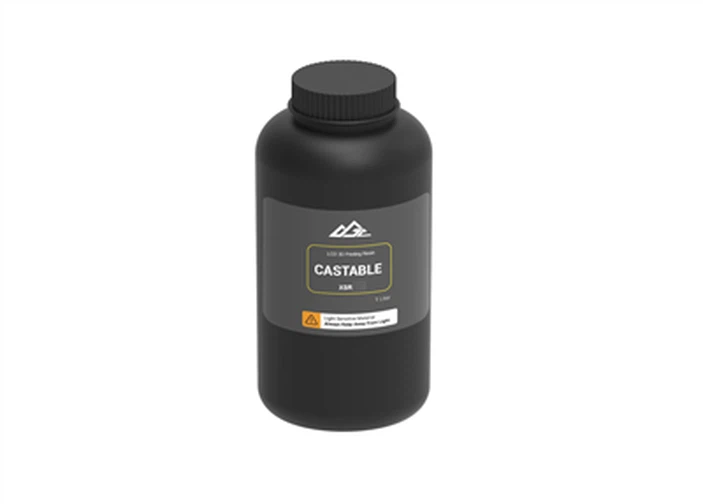
High-precision printing: With advanced printing technology, it can achieve micron-level precision, ensuring that the printed dental restorations, such as crowns, bridges, implant guides, etc., are precisely adapted to the patient's oral structure with minimal error, effectively improving the restoration effect.
Wide material compatibility: It is compatible with a variety of biocompatible materials, including ceramics, resins, metals, etc., to meet different dental restoration needs. It can not only print beautiful and realistic porcelain crowns, but also make high-strength metal implant guides, providing a variety of options for personalized treatment.
Convenience of operation: Designed specifically for dental professionals, the interface is simple and easy to understand, and the operation process is simplified. Doctors can quickly get started without complex training, and easily convert patients' oral scan data into physical restoration models, saving diagnosis and treatment time.
Rapid prototyping capability: With efficient printing speed, compared with traditional handmade dental restorations, the production cycle is greatly shortened, and it can provide patients with urgently needed restoration products in a short time, improving diagnosis and treatment efficiency.
Personalized customization service: Printing is based on the patient's individual oral scan data. Each restoration is unique, truly realizing personalized medical care and meeting patients' diverse and specialized oral restoration needs.
Compared with traditional dental restorations
| Features | Details | Comparison with Traditional Dental Restoration Methods |
| High-precision Printing | Utilizes advanced technology to achieve micron-level precision,ensuring that dental restorations such as crowns,bridges,and implant guides fit precisely with the oral structure,with minimal error. |
Traditional handcrafting relies heavily on the technician's experience, making it difficult to control precision. It is prone to poor fitting between the restoration and the oral cavity, affecting the restoration effect and wearing comfort. |
| Wide Material Compatibility | Compatible with a variety of biocompatible materialssuch as ceramics,resins,and metals,meeting different restoration requirements such as porcelain crowns and metal implant guides. |
The selectable materials are relatively limited and it is difficult to balance aesthetics and functional diversity. For example, it is challenging for some traditional methods to create a fine and aesthetic outer restoration structure using metal materials. |
| EasyOperation | The interface is simple and intuitive,specially designed for dental professionals.The operation process is streamlined,allowing doctors to get started with just a brief training and quickly convert oral scan data into physicalrestorations. |
Technicians need long-term professional study and practical experience to master complex techniques. The production process is cumbersome and takes a long time from model making to restoration completion. |
| Rapid Prototyping Ability | With high-efficiency printing speed,significantly shortening the production cycle and providing urgently needed restoration products in a short time. |
Handmade production involves multiple steps and takes a long time. When patients urgently need restorations, it is difficult to deliver them quickly, prolonging the patient's waiting time. |
| Personalized Customization Service | Prints based on individual patient's oral scan data,making each restoration unique and realizing personalized medicine. |
Mostly based on experience and standard templates, it is difficult to achieve precise personalization for individual patient's special conditions. For example, patients with special oral structures may not get the most suitable restorations. |
Castable Resin Inspection Certificates

Picture Show


FAQ
1.Is the quality of restorations printed by dental 3D printers reliable?
Very reliable. It uses advanced technology to achieve high-precision printing with minimal error, can accurately adapt to the patient's oral structure, and can use a variety of biocompatible materials. From accuracy to material properties, it provides solid guarantee for the quality of restorations, effectively improves the success rate of restorations, and reduces the trouble of subsequent adjustments.
2.Is it difficult to operate a dental 3D printer for a small dental clinic?
Not difficult. Its operating interface is designed to be simple and easy to understand for dental personnel, and the operating process has been simplified. Doctors only need to undergo simple training to quickly get started and convert patient oral scan data into physical restoration models. There is no need to require doctors to master complex processes as in traditional methods, saving manpower and time costs.
3.Compared with traditional manual production, how does a dental 3D printer perform when dealing with emergency patients?
Excellent performance. It has the ability to quickly form, and its efficient printing speed can greatly shorten the production cycle, providing products to patients in urgent need of restorations in a short time. Traditional manual production has many steps and takes a long time, and it is difficult to deliver quickly in an emergency. The use of 3D printers can greatly alleviate the anxiety of patients waiting and improve the emergency handling capabilities of clinics.
4.Can dental 3D printers meet the special needs of different patients?
Absolutely. One of its biggest advantages is personalized customization services. It prints according to the patient's individual oral scan data. Patients with special oral structures or unique requirements for beauty and function can get unique restorations. It is difficult to accurately achieve this kind of personalization with traditional manual production.
Contact Us:xslightings@xslightings.com
Hot Tags: 3d printers for dental practices, China, suppliers, manufacturers, factory, custom, wholesale
Technical Data:
Liquid Properties
| Appearance | Liquid resin | |
| Viscosity @25°C,cps | 125 ±25 | |
| Density @25°C,g/cm³ | 1.05 -1.13 | |
| Alcohol solubility | Soluble in alcohol | |
| Water solubility | Slightly soluble in water | |
| Color | Green | |
Light-cured Solid Properties:
| Item | Post-cured | Method |
| Hardness,D | 81 | Scale D |
| Tensile Strength,MPa | 42-62 | ASTM D638 |
| Young's Modulus,MPa | 2545±100 | ASTM D638 |
| Elongation at Break,% | 15±5 | ASTM D638 |
| Flexural Strength,MPa | 53±5 | ASTM D790 |
| Flexural Modulus,MPa | 2425±100 | ASTM D790 |
| 1ZOD Impact Strength,J/m | 46±3 | ASTM D256 |
| HDT,°C | 75 | ASTM D-648 |
| Volume shrinkage,% | 1.88-2.45 | |
| Linear shrinkage,% | 0.8-1.00 | |
| Thermal expansion | 95*E-6 | |
| Glass transition temp,°C | 110 |
Previous
Resin 3D Printer For DentistrySend Inquiry
