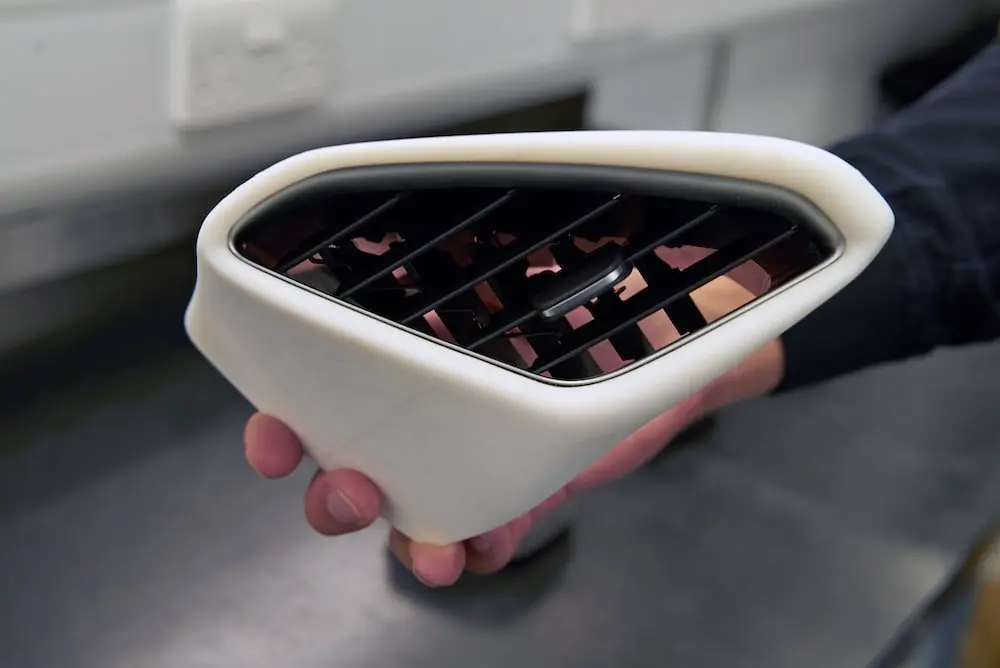
Applications
3D printing is essential in the automotive industry for boosting efficiency across multiple stages of production and development.
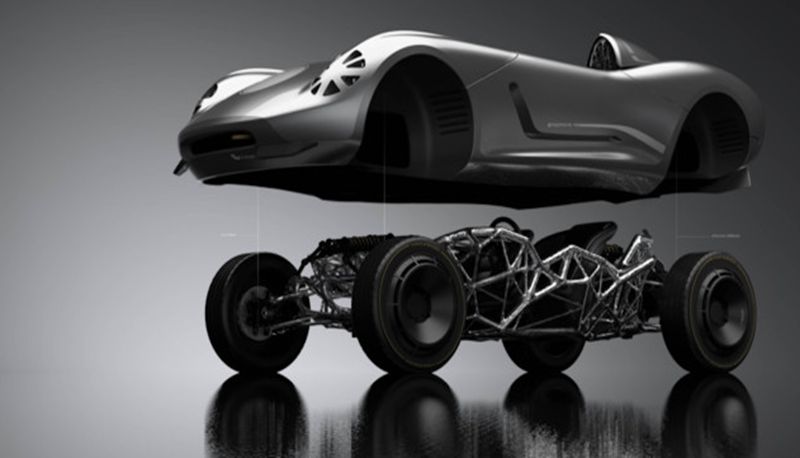
The application potential of 3D printing technology in the automotive industry
3D printing technology has penetrated into all aspects of automobile manufacturing - from prototype development, spare parts manufacturing to final component production. Today's printing materials can not only be used to create lightweight structures, but are also highly durable and meet complex industrial needs.
The introduction of 3D printing technology can significantly optimize the production process, shorten the delivery cycle, and reduce manufacturing costs. At the same time, potential problems can be identified and fixed in the early stages of prototyping, reducing the risk of rework. The technology also minimizes material waste, improves resource utilization, and makes vehicles and their components lighter. By supporting small-batch customized production, 3D printing technology can not only be used to manufacture equipment for specialized vehicles (such as ambulances and police cars), but can also efficiently produce end parts such as racing accessories, providing the industry with more flexibility and room for innovation.
Benefits of Using 3D Printing in the Automotive Industry
Efficient Prototyping
3D printing accelerates the prototyping process by allowing manufacturers to quickly design, test, and refine components. This rapid iteration helps identify design flaws early, reducing the need for multiple revisions and improving development timelines.
Reducing Time and Costs
By streamlining production processes, 3D printing minimizes manufacturing time and lowers operational costs. It eliminates the need for complex tooling, making it ideal for low-volume or specialized parts, such as customized components for emergency vehicles.
Easy Post-Production
3D printing simplifies post-production tasks, as components often require minimal finishing. With fewer assembly steps and better precision during the printing process, manufacturers can deliver high-quality parts faster, further enhancing efficiency and reducing labor costs.
3D printing improves efficiency in the automotive industry
3D printing technology plays an important role in improving efficiency in all aspects of automotive manufacturing. It is particularly suitable for rapid prototyping required for design verification, tool assembly and testing, and can also directly produce terminal parts and spare parts required for machines. These parts are often difficult to obtain due to insufficient inventory or high individual production and procurement costs.
Through 3D printing, automakers can flexibly respond to production challenges, shorten delivery cycles, reduce inventory costs, and quickly manufacture key components in emergency situations, thereby achieving more efficient supply chain management and production operations.