


Desktop Sla Printer
◆Product size: 350*315*H455mm
◆Printing volume: 228*128*H245mm
◆HD resolution: 7680*4320
◆UI interface operation: touch screen
Description
Technical Parameters
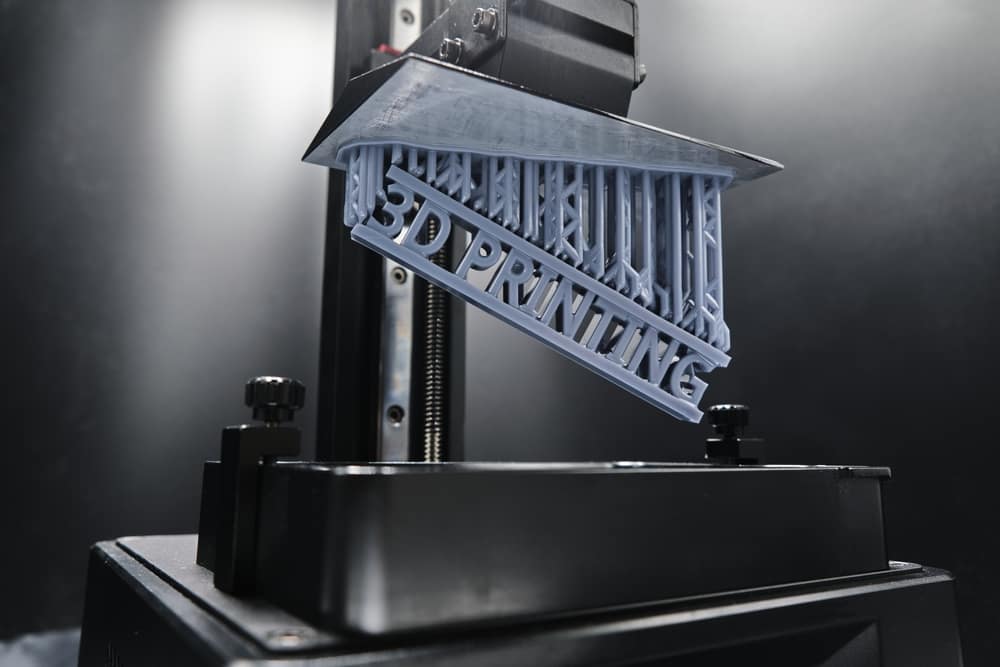
Desktop SLA Printer, or desktop light-curing 3D printer, is designed for professionals and educators. It is compact, economical, easy to use and safe, suitable for office environments. The device can print detailed and high-quality models with high resolution. It is widely used in industries such as jewelry, dentistry, and watches, helping practitioners to quickly make prototypes or small models, providing strong support for the realization of creativity.
High-precision printing:
It can generate extremely fine details, and the printing quality far exceeds that of ordinary plastic extrusion printers, which is suitable for making complex and fine parts.
Excellent surface quality:
The surface of the printed product is smooth, and the subsequent processing workload is small, saving time and cost.
Diverse materials:
It is compatible with a variety of liquid photosensitive resins to meet the needs of different fields such as engineering, jewelry, and dentistry.
Easy operation:
The simple operation interface allows both novices and professionals to quickly get started.
Product Specifications
|
Product Size:
|
350*315*H455mm
|
Power:
|
Print 120w, Heating 200w
|
|
Package Size:
|
445*420*550mm
|
UI Operation:
|
Touch screen
|
|
Package Weight:
|
19kg
|
File Format:
|
STL
|
|
Printing Volume:
|
228*128*H245mm
|
HD Resolution:
|
7680*4320
|
| Rated capacity | 800/1000/1150/1275kg |
Light spot size:
|
29.6μm
|
|
Exposure time:
|
2-3s/layer(0.05mm)
|
Printing Tolerance:
|
±0.05
|
|
Technology:
|
LCD Photocuring
|
Layer Height:
|
0.03,0.05,0.1mm
|
|
Wavelength Range:
|
402.5-405mm
|
Resin Vat Capacity:
|
0.7kg
|
|
File Transfer:
|
USB
|
Constant Temperature:
|
25℃,30℃,35℃ automatic constant temperature system
|
|
Printer System:
|
Linux
|
Voltage:
|
110, 220V (produced on demand)
|

Working principle
Liquid resin filling:
The resin tank is filled with liquid photosensitive resin, which can be quickly cured under certain conditions.
Laser scanning and curing:
The computer controls the ultraviolet laser, scans the surface of the liquid resin point by point according to the layered cross-sectional data of the design model, and the resin in the irradiated area undergoes polymerization reaction and solidification to form a solidified thin layer.
Platform movement and resin flow:
After completing a layer of curing, the platform rises according to the layer thickness, and the excess resin flows under the printed part to prepare for the next layer of printing.
Repeating process and post-processing:
Repeat the above steps until the model is completed, then clean the model and place it in a UV oven for final curing to improve the strength and stability of the model.
Comparison of SLA with other 3D printing technologies
SLA vs DLP
Building size: SLA can print a larger area, while DLP is limited by the size of the optical machine pixel and the molding size is limited3.
Structural complexity: Since SLA has no pull-out problem, the support structure can be made relatively small or sparse, which is suitable for printing parts with complex structures.
SLA vs FDM
Material cost: The liquid photosensitive resin used in SLA is usually more expensive than the plastic filament in FDM technology.
Printing speed: SLA usually has a slower printing speed due to its layer-by-layer curing method, while FDM technology can achieve faster printing speeds.
FAQ
1. What is the price range of the equipment?
Prices vary depending on brand, model and configuration, ranging from thousands of yuan to tens of thousands of yuan. You can choose according to your budget and needs.
2. Is the cost of printing materials high?
The cost of printing materials varies depending on the type of resin. Some special resins are relatively expensive, but overall the cost is decreasing with the development of technology.
3. Is the equipment maintenance complicated?
The maintenance is relatively simple. You only need to clean the equipment regularly and replace consumables such as resin tanks. Most manufacturers provide detailed maintenance guidance and after-sales service.
4. What is the printing speed?
The printing speed depends on the complexity of the model and the layer thickness setting. Generally, several to dozens of layers can be printed per hour.
5. What is the equipment warranty policy?
The warranty policies of different manufacturers are different. Common warranty periods for the entire machine are 1-2 years, and some key components have a longer warranty period. Please pay attention when purchasing.
Hot Tags: desktop sla printer, China, suppliers, manufacturers, factory, custom, wholesale
Previous
Desktop Sls PrinterSend Inquiry


